How to Get Your First 1,000 Readers Without Paying for Ads
A distribution playbook for new blogs: communities that actually welcome you, cold outreach that gets replies, the SEO bet worth making early, and a weekly schedule to keep it all sustainable.
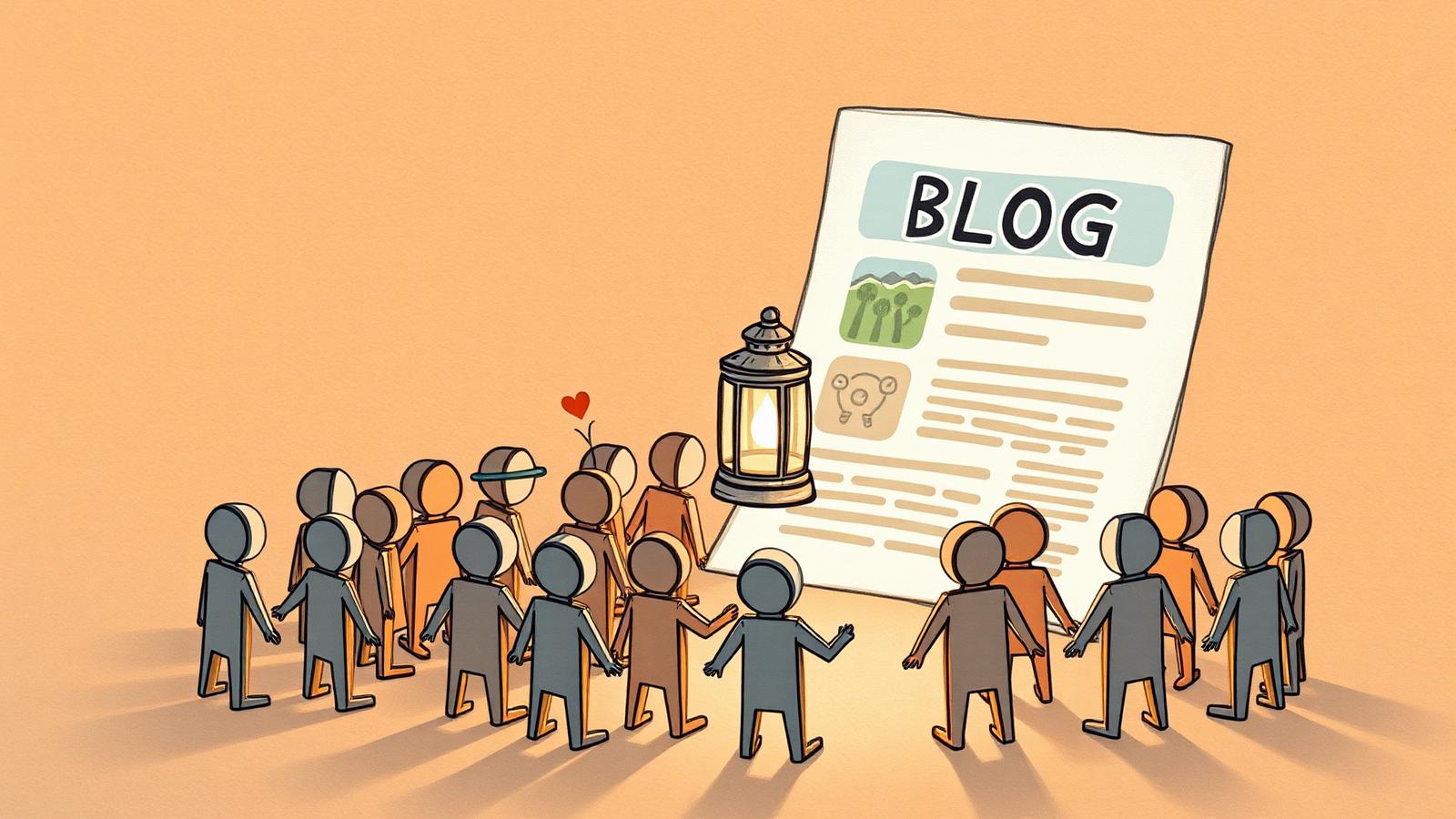
Nobody is going to find your new blog on their own. Google won't rank you for months. Social algorithms bury links to unknown domains. Even your friends will forget to click. Distribution is not a nice-to-have for a new blog — it is the entire job in year one.
The good news: you don't need to be everywhere, you don't need to be loud, and you don't need to pay for ads. You need one focused weekly rhythm across four channels, done consistently for three to six months.
The 1,000-reader plateau (and why it matters)
The first 1,000 real readers are the hardest to earn and the most valuable. They are the ones who tell friends, join the newsletter, reply to your emails, and become the seed audience that makes future distribution easier. Above 1,000 monthly readers, a blog starts compounding: search traffic accelerates, other bloggers start noticing, and pitches become easier because you can cite real numbers.
Below 1,000, everything is a slog. This guide is about crossing that plateau on purpose, not by accident.
The four-channel weekly rhythm
Every week you touch each of these four channels once. That's it. Not all of them every day; not all of them at once; not none of them for months at a time.
- Communities — where your reader already gathers.
- Cold outreach — one real email a week to someone bigger than you.
- Search — one post a month optimised for a specific keyword.
- Owned audience — the email list, treated like it matters.
Skip any one of these for long and growth stalls. Do all four consistently and 1,000 readers becomes a matter of when, not if.
Channel 1 — Communities: earn the right to link
Find two places online where your ideal reader already hangs out. A subreddit. A Discord. A Facebook group. A Slack community. An industry forum. Not "generic marketing groups" — the specific community your specific reader is in.
Rules that separate people who get banned from people who get bookmarked:
- Read the sub for a week before posting. Every community has a culture. Learn it.
- Answer three questions for every link you drop. The ratio matters.
- Never drop a link to a homepage. Link to the specific post that answers the specific question being asked.
- Introduce yourself as a person, not a brand. "I've been writing about X for a few months and wrote this up — happy to answer questions here too" beats "Check out my new post on X!" every time.
- Follow up in the thread. The comment on your comment is where trust is built.
The bloggers who complain that "Reddit doesn't work" almost always broke rule two.
Channel 2 — Cold outreach that isn't gross
You can grow faster with one thoughtful email a week than with a hundred generic pitches. Here is the shape.
- Read something they published in the last month. Not their bio. A recent post.
- Reply to it specifically. One thing you agreed with, one thing you'd add, one thing they got you thinking about.
- Mention what you're working on in a single sentence. No link unless they ask.
- Ask nothing. No favours. No shares. No guest post pitches. Not in this first email.
Roughly one in five will reply. Roughly one in ten replies leads somewhere — a share, a mention, a mutual link, a podcast, an invite. That's a 2% conversion on a channel that costs you 20 minutes a week. Compound that for a year.
Once you have a real relationship, the ask becomes easy and almost never refused. Bloggers help other bloggers they actually know.
Channel 3 — The SEO bet worth making early
SEO is slow. That is why new bloggers give up on it. It is also why the ones who don't quit dominate a year later.
You are not going to out-rank Wirecutter. You can out-rank the messy little pages that currently rank for very specific, low-volume, high-intent keywords in your niche.
Rules for early SEO:
- Chase keywords with 100–500 monthly searches. Big enough to matter, small enough to win.
- Target long-tail phrases ("best budget mirrorless camera for street photography under $1000"), not head terms ("best camera").
- Match the search intent exactly. If Google is showing lists, write a list. If it's showing tutorials, write a tutorial. Don't fight the SERP.
- One optimised post per month. More than that, quality dips. Less, and momentum dies.
- Update, don't just publish. Every three months, revisit your best posts and add, sharpen, or restructure. Google rewards freshness applied to strong pages.
Ninety percent of your organic traffic in year two will come from ten percent of your posts. You are looking for those ten percent, and the only way to find them is to publish and see which ones rank.
Channel 4 — Your email list: small, powerful, ignored
Every new blogger says "I'll start an email list once I have more readers." That is exactly backwards. The list is how you get more readers.
- Add a form to your site on day one, even if it converts at 1%.
- Promise something specific. "New post every Tuesday" is fine. "Weekly rundown of the three best resources I read this week in [niche]" is better.
- Send something every single week for the first three months. Even to 12 people. This is where you learn to write for a specific person.
- Reply to every single reply. For the first year, no exceptions. This is the difference between a newsletter and a broadcast.
- Ask subscribers what they want more of. Once a month. Actually read the answers.
An email list of 200 engaged readers will drive more traffic to a new post than 5,000 Twitter followers. It also can't be taken away by an algorithm change.
Bonus channels that punch above their weight (pick one, not all)
Do not try to be on every platform. Pick one bonus channel that fits your niche and voice, then ignore the rest.
- Pinterest — quietly one of the best sources of evergreen traffic for design, food, home, parenting, craft, wedding, and lifestyle niches. Pin every post 3–5 times with different images and descriptions.
- YouTube shorts / TikTok — if you're comfortable on camera and your niche is visual or demo-friendly.
- Newsletter cross-promotions — swap recommendations with 3–5 newsletters roughly your size. Free, high-quality subscribers.
- Guest posts — one well-placed guest post on a bigger blog can outperform six months of communities work. Aim for one a quarter, not one a week.
- HARO / expert quote sites — respond to journalist requests in your niche. Ten minutes for a potential link from a major publication.
The weekly schedule (2–3 hours, sustainable for a year)
Monday, 30 min — write in the community you joined. Answer, don't post.
Tuesday, 60 min — send the newsletter.
Wednesday, 30 min — send one real cold email.
Thursday, 30 min — 20 minutes on your bonus channel, 10 minutes replying to newsletter replies.
Friday, 20 min — check Search Console. Note which posts got impressions. Plan next month's SEO post.
That's it. Not "hustle 20 hours a week." Not "post 3 threads a day." A quiet, boring, weekly rhythm you can hold for a year without burning out.
Signs it's working (and signs it isn't)
Working:
- Newsletter open rate above 40%.
- People replying to newsletters unprompted.
- Comments and DMs from strangers about specific posts.
- Search Console impressions rising month over month, even if clicks are still low.
Not working:
- All traffic still from your own social profile.
- No repeat visitors in analytics.
- Newsletter growth flat for 8 weeks straight.
If you see the "not working" signs, the fix is almost never "more content." It is one of: sharpen the niche, sharpen the promise, or fix the community fit — you're posting where your reader isn't.
Do this next
- Pick your two communities. Bookmark them. Read them for a week.
- Draft your newsletter welcome email today, even if you have zero subscribers.
- Write down the one bonus channel you'll try. Cross out the rest.
- Block the five weekly slots above in your calendar as recurring events. Distribution is a job; treat it like one.
Further reading
For a full playbook on early-stage blog traffic that goes beyond this article, this is my current pick: recommended growth book on Amazon. Affiliate link.