Blog SEO for Beginners: A 12-Week Ranking Roadmap
A practical 12-week SEO roadmap for new blogs: technical foundations, keyword research, content sprints, on-page optimisation and realistic link building — all in order.

Why new blogs fail at SEO
Most new blogs do not fail because the writer is bad. They fail because the writer tries to do everything at once, ranks for nothing, and quits before the compound effect kicks in.
The pattern is painfully common. A new blogger reads that SEO is "keyword research + backlinks + good content," then attempts all three simultaneously. They install five plugins, buy a cheap keyword tool, write three posts, beg for backlinks on Twitter, and burn out by week four. Nothing ranks. They assume SEO doesn't work for small sites.
It does. But the order matters. A brand-new blog with zero authority cannot compete for the same terms as a site with ten years of backlinks and a content library. The only rational strategy is to start with the parts of SEO that do not depend on authority, then layer on the parts that do once you have proof of life.
That is what this 12-week roadmap is. It is not a checklist of every SEO tactic. It is a sequence of weekly priorities that builds momentum without overwhelming you. By the end, you will have a technically sound site, a cluster of optimised content, and a realistic link-building habit. Most importantly, you will have data that tells you whether to keep going.
The 12-week roadmap at a glance
Before we go week by week, here is the shape of the plan:
- Weeks 1–2: Technical foundations — make sure Google can crawl, index and render your site cleanly.
- Weeks 3–4: Keyword research — find terms you can actually rank for with a new site.
- Weeks 5–8: Content sprint — publish one pillar and six to eight supporting posts in a tight cluster.
- Weeks 9–10: On-page optimisation — tighten titles, descriptions, URL slugs, internal links and image alt text.
- Weeks 11–12: Realistic link building — the safe, repeatable ways a new blog earns its first quality links.
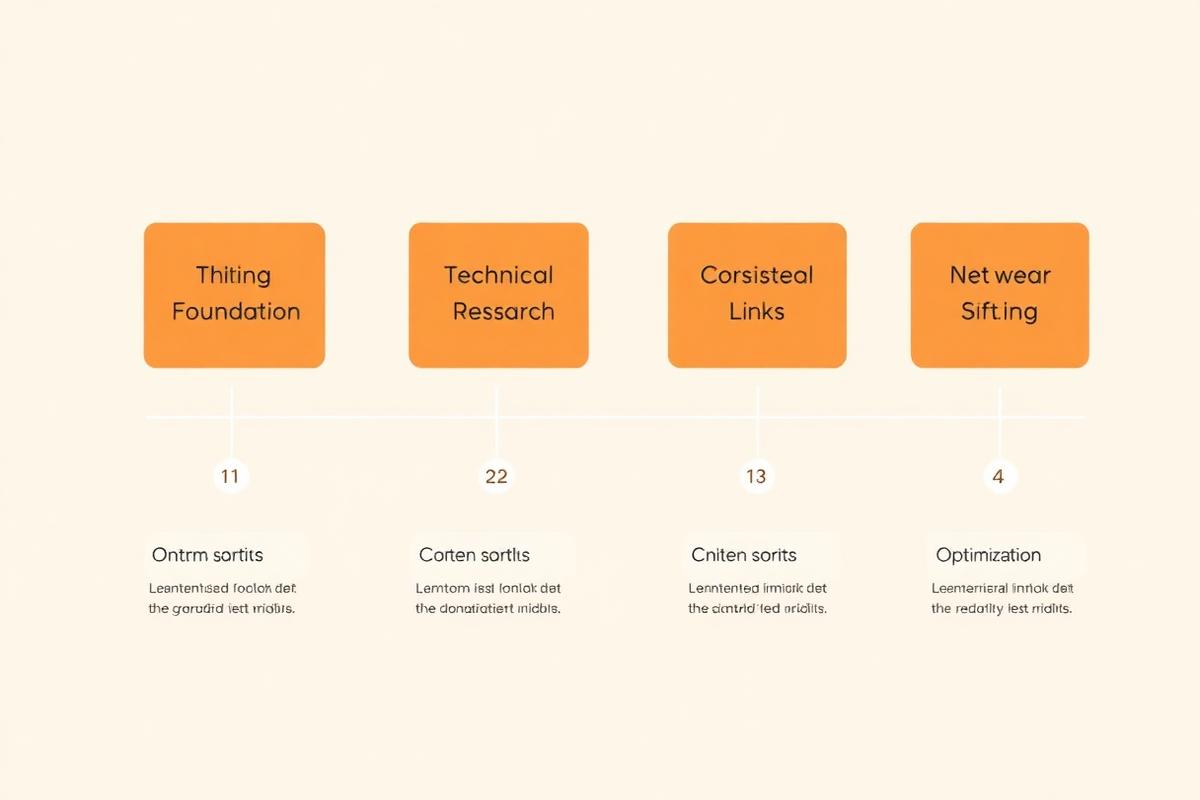
Do not skip ahead. A technically broken site wastes the content you write. Content without keyword intent wastes the links you earn. The sequence is the strategy.
Weeks 1–2: Technical foundations
You cannot rank if Google cannot find and understand your pages. The good news is that for a new blog, technical SEO is small. You do not need an enterprise audit. You need four things to be clean.
Make your site indexable
Ensure your robots.txt file is not blocking the whole site. WordPress users should check that the "Search engine visibility" setting is not ticked. Add a sitemap to Google Search Console and Bing Webmaster Tools. This is a five-minute task that many people forget for six months.
Fix mobile usability
Google uses mobile-first indexing. Your site must be readable on a phone without pinch-zooming. Test it yourself on a real device. If the font is too small, the menu is broken, or the text overflows the viewport, fix the theme before you write another post.
Get your page speed into acceptable territory
You do not need perfect scores. You need fast enough. For a new blog, that means:
- A lightweight theme or no bloated page builder.
- Images compressed and served in modern formats.
- No unnecessary plugins or scripts.
- A caching plugin if you are on WordPress.
Run a page through Google PageSpeed Insights. If the core issues are obvious — oversized images, render-blocking scripts, no caching — fix them now. If the issues are obscure, note them and move on. Speed is a tiebreaker, not a magic bullet.
Add basic schema markup
At minimum, add Organization or Person schema, Article schema for posts, and BreadcrumbList schema. Most modern themes handle this. If yours does not, use a schema plugin or a JSON-LD generator. Do not overthink it. You are not trying to win rich snippets on day one; you are trying to look like a real site.
Weeks 3–4: Keyword research for a new blog
This is where most beginners fail. They open a keyword tool, sort by volume, and chase the biggest number. Then they wonder why a three-week-old blog cannot rank for "best credit cards" or "how to lose weight."
Your goal is not traffic. Your goal is proof. You want to find terms where you can realistically rank with zero backlinks and one good post.
The three keyword filters for new sites
Run every keyword through these three questions:
- Is the intent informational? Look for "how to," "what is," "why does," "best way to," "guide," "tutorial," "tips." These terms reward depth and clarity, not just domain authority.
- Are the current results beatable? Search the term. If the first page is dominated by Wikipedia, Forbes, Healthline, or major brands, skip it. If the first page has forums, thin listicles, old blog posts, or Quora threads, you have an opening.
- Can you serve the searcher better than the current result? Do not target a keyword unless you can genuinely improve the answer. Better means clearer, more complete, more recent, or more specific.
Long-tail is not a dirty word
A keyword with 50 monthly searches and weak competition is worth more to a new blog than a keyword with 5,000 monthly searches and a first page of media giants. One ranking post gives you confidence and a small stream of traffic. Ten ranking posts give you momentum.
Look for question keywords from forums, Google's "People also ask," AnswerThePublic, and the bottom of the SERP. These are the exact questions your content should answer.
Build a starter keyword list
Aim for 15–20 keywords before you start writing. Group them into three to four clusters around related topics. For example, a blog about sustainable gardening might have clusters on composting, container gardening, pest control, and soil health. Each cluster will become one pillar post and several supporting posts.
Weeks 5–8: The first content sprint
This is the hardest part of the roadmap. You will write more in four weeks than most new bloggers write in four months. That is the point. Search engines and readers both reward density.
Publish one pillar post
A pillar post is a broad, definitive guide to one of your clusters. It should be 2,500–4,000 words, cover the topic thoroughly, and link out to your supporting posts. Its job is to signal expertise and to capture the broader, more competitive term in your cluster.
For example, "The Complete Guide to Composting for Beginners" is a pillar. It links to your narrower posts on "How to Compost in an Apartment," "Best Brown Materials for Compost," and "How to Fix a Smelly Compost Bin."
Publish six to eight supporting posts
Each supporting post targets one of your long-tail keywords. Keep them focused. One keyword, one promise, one clear structure. Aim for 1,200–2,000 words. They should be thorough enough to beat the current results, but not padded.
Use a consistent internal linking pattern
Every supporting post should link back to its pillar. Every pillar post should link to its supporting posts. Two or three internal links per post is the minimum. Use descriptive anchor text. This is how you build topical authority without waiting for backlinks.
Publish on a schedule
Post at least twice a week during the sprint. It does not matter which days. What matters is that you ship. Block writing time in your calendar. Turn off the editor part of your brain while drafting. Edit later. Done beats perfect in the first year.
Weeks 9–10: On-page optimisation
Now you have content. It is time to make sure each post is dressed correctly for search results.
Title tags and meta descriptions
Your title tag should include the target keyword near the front, make a clear promise, and stay under 60 characters. Your meta description should summarise the benefit, include a soft call to action, and stay under 160 characters. These are not just for SEO; they are your ad copy in the search results.
URL slugs
Keep slugs short, keyword-rich, and hyphenated. A post targeting "how to start a compost bin" should be /how-to-start-a-compost-bin/, not /2026/08/15/my-thoughts-on-composting. Never change the slug of an existing post unless you redirect it properly.
Image alt text and file names
Rename images before uploading. compost-bin-setup.jpg is better than IMG_4821.jpg. Write alt text that describes the image for screen readers and includes the keyword naturally if it fits. Do not keyword-stuff alt text.
Internal linking pass
Go back through your posts and add links between related content. A reader learning about composting should be able to move from your pillar post to your troubleshooting post without hitting a dead end. This is also a signal to search engines that your site is a connected resource, not a pile of isolated articles.
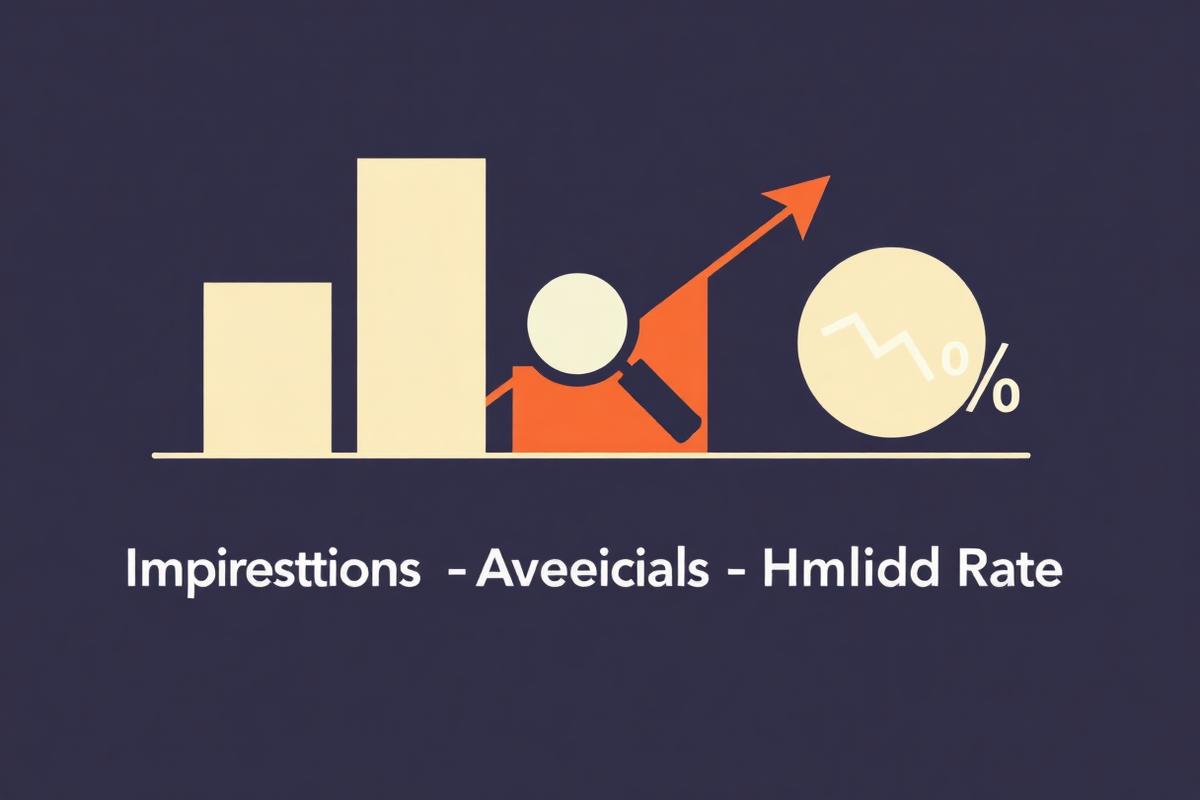
The three metrics that matter in months 1–3
Do not obsess over total traffic. Early traffic is noisy. Watch these three signals instead.
Impressions
Impressions are the number of times your site appears in search results. In the first three months, rising impressions are the most important sign. It means Google is testing your pages. If impressions are flat after six weeks, you are either not targeting the right keywords or your site is not being indexed properly.
Average position
Average position tells you where your pages appear across all your tracked queries. It will start in the 50s or 60s. A slow move toward the 20s is good. A move toward the top 10 is excellent. Expect this to take months, not weeks.
Click-through rate
Click-through rate is clicks divided by impressions. It tells you whether your title and meta description are compelling. If your CTR is low but impressions are high, rewrite your title and description. If your CTR is high but impressions are low, you need more keywords or more content.
What to ignore in year one
The list of SEO distractions is long. Here are the ones that waste the most time for new bloggers.
Domain Authority obsession
Third-party authority scores are rough estimates, not official ranking factors. A brand-new blog will have a low score. That is normal. Write content and earn links; the score will follow. Do not check it weekly.
Black-hat tactics
Buying links, private blog networks, comment spam, and keyword stuffing can get a site penalised. They are not worth the risk for a blog you intend to keep for years.
Expensive SEO tools
You do not need Ahrefs, Semrush, or Surfer SEO in month one. Free tools — Google Search Console, Google Keyword Planner, AnswerThePublic, and a simple spreadsheet — are enough. Buy tools when your traffic justifies the cost, not before.
Chasing every algorithm update
Google updates several times a year. A new blog with good content and clean technical foundations rarely gets hurt by broad updates. If your site is affected, it is usually fixable. Do not redesign your strategy every time an SEO blog panics.
Weeks 11–12: Realistic link building for a new blog
Backlinks are still a ranking factor, but a new blog cannot compete for the same links as established sites. You need low-barrier, high-trust tactics.
HARO and journalist requests
Help A Reporter Out, and services like Qwoted and SourceBottle, connect journalists with sources. Answer relevant queries clearly and quickly. If you are quoted, you get a link. Success rate is low, but the links are authoritative. Spend 15 minutes a day on it.
Guest posts on relevant sites
Write one article for a blog in your niche. The link back to your site should be natural, not forced. Do not guest post on irrelevant sites just for the link. That is a short-term tactic that builds long-term risk.
Original data or mini case studies
Run a small survey, publish a unique experiment, or share your own results with numbers. Original data is one of the most linkable things you can publish. Even a simple "I tested five composting methods for 30 days" post can earn links from gardeners and eco-living blogs.
Niche directories and resource pages
Find directories, association sites, and resource lists in your niche. Submit your site if it is genuinely relevant. Do not submit to every generic directory you find. Quality over quantity.
Build relationships first
The best links come from people who know your name. Comment thoughtfully on other blogs, reply to newsletters, share useful work, and help people before you ask for anything. Link building is relationship building with a citation at the end.
Do this next
- Submit your sitemap to Google Search Console and Bing Webmaster Tools today.
- Pick one cluster and find 15–20 long-tail keywords this week.
- Write and publish your pillar post within the next two weeks.
- Schedule six supporting posts to publish over the following four weeks.
- Set a weekly calendar reminder to review Search Console impressions, average position, and click-through rate.
- Pick one link-building tactic and commit to it for 30 days.
Further reading
For a deeper look at building a blog that actually earns attention, I recommend this book on blogging strategy. Affiliate link — supports the site at no cost to you.