Choosing a Blog Niche That Actually Pays (Without Being Boring)
A practical framework for picking a niche that has real demand, real money, real defensibility — and that you can stand to write about at post #80.
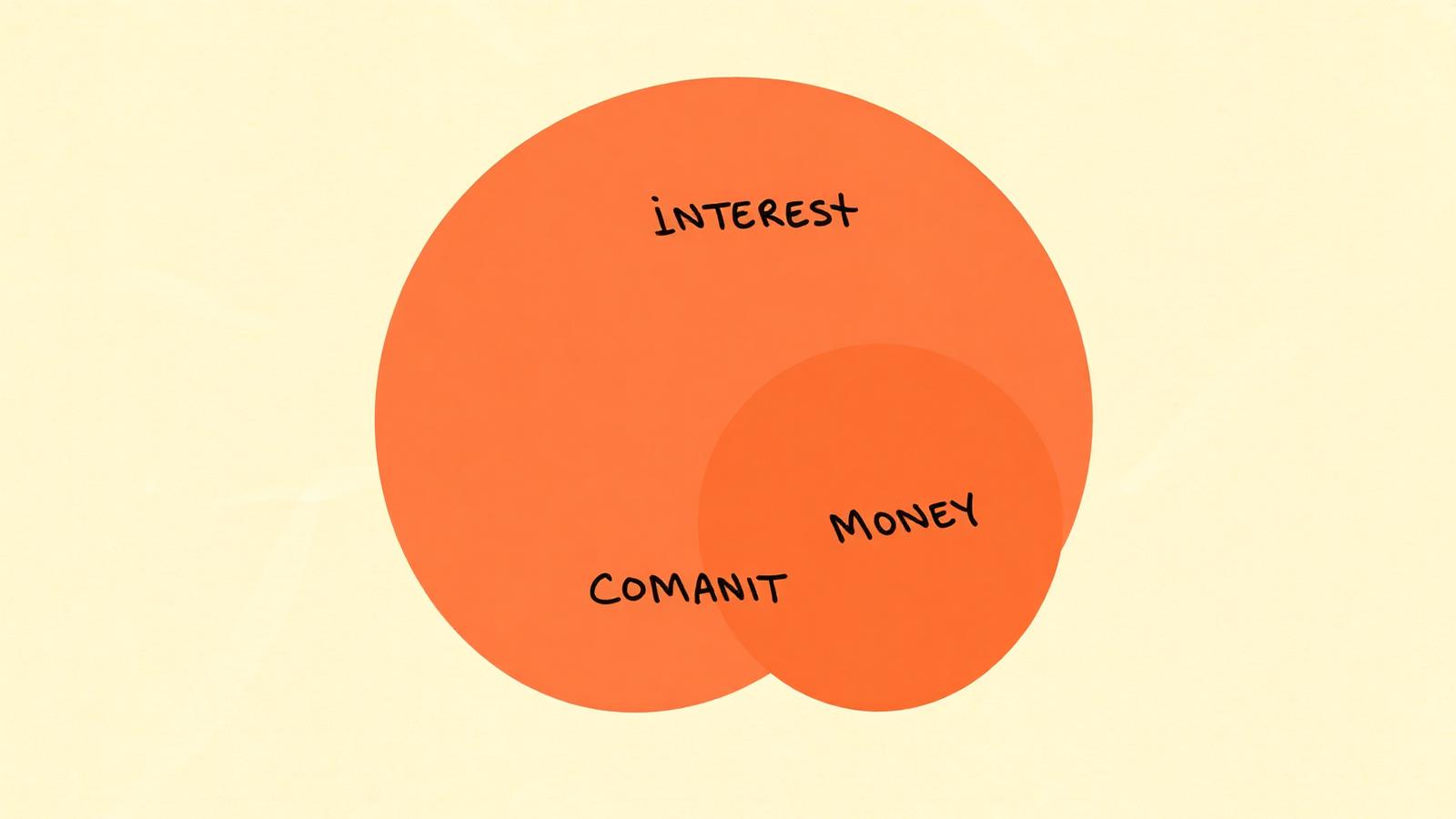
The single biggest reason new blogs die at post 20 is niche. Either the niche was too broad ("lifestyle"), too narrow ("Zwift training plans for cyclists over 6'2"), too crowded, too broke, or — most commonly — too boring for the person writing it. This guide gives you a framework to pick a niche that survives all five failure modes.
The four-circle framework
Every viable blog niche sits at the intersection of four things. Miss one and you'll feel it within a year.
- Interest. You can genuinely stand to think about this for 500 hours. Not "I like it." Obsession-adjacent.
- Demand. People are already searching for it, asking about it, buying about it. You are not creating a market; you are meeting one.
- Money. There is a path — ads, affiliates, digital products, services, sponsorships — where readers routinely spend money on this topic.
- Defensibility. You can win against the incumbents on some axis other than budget. Angle, voice, depth, specificity, first-hand experience.
Three out of four gets you a hobby. Four out of four gets you a business.
Why "just pick something you love" is bad advice
The internet is full of people who loved knitting, started a knitting blog, and quit six months in with 40 monthly visitors. Loving the topic keeps you writing. It doesn't put readers on the page. And it definitely doesn't put money in the account.
The reverse is also bad advice. "Pick the most profitable niche" produces the beige army of insurance-comparison sites nobody links to and Google no longer ranks.
You need both. The framework above is how you check.
Stress-testing your niche idea
Take your candidate niche. Run it through these twelve checks. If you can't pass eight, keep looking.
- Can you name your reader in one sentence? "Home cooks who want to eat plant-based twice a week without buying weird ingredients." Yes = pass.
- Can you name five specific problems they have right now? Not "they want to be healthier." Specific: "they don't know what to do with tofu."
- Are people paying for solutions? Search the App Store, Amazon, Etsy, Gumroad, Udemy. If nobody is selling here, either you've found a gap — or, more likely, there is no market.
- Is there an affiliate ecosystem? Do the tools, books, or services your reader uses have affiliate programs? If yes, monetisation is straightforward.
- Do 3+ blogs already make a living in this niche? Not "exist." Actually make a living. Their existence is evidence the niche pays.
- Can you find 20 keywords with real search volume? Use any keyword tool. If your niche has ten total keywords with meaningful volume, you have a ceiling.
- Are those keywords not dominated by huge sites? If every search returns Healthline, NerdWallet, or Wirecutter, you can still win — but only with a sharper angle.
- Can you write 50 post titles right now? Not perfectly. Just titles. If you dry up at 12, the niche is too narrow.
- Would you still find it interesting at post 80? Be honest. This is the question that separates a blog from a burnout.
- Do you know something most competitors don't? Experience, credentials, contrarian view, access, obsession — pick one.
- Is there a natural upsell? A course, a template, a community, a service. Ads alone are a poor business.
- Can you describe the blog to a stranger in one sentence they'd remember? "It's a blog about X for Y people." If they nod, you're on it.
Eight worked examples: narrow, don't broaden
The single most useful move in choosing a niche is narrowing. Broad niches feel safer — more possible readers, more possible posts — but they are far harder to rank, monetise, or make memorable. Here are eight before/after examples showing the same instinct made sharp.
- ❌ Fitness → ✅ Strength training for women over 40 who lift at home.
- ❌ Personal finance → ✅ Getting out of consumer debt on a UK single-parent income.
- ❌ Travel → ✅ Slow travel in Southeast Asia for remote workers on a $2,500/month budget.
- ❌ Food → ✅ Weeknight vegetarian meals for families with a fussy child.
- ❌ Parenting → ✅ Raising bilingual kids in monolingual households.
- ❌ Productivity → ✅ Deep-work systems for people with ADHD.
- ❌ Marketing → ✅ SEO for one-person SaaS founders.
- ❌ Gardening → ✅ Balcony vegetable growing in cold northern climates.
Notice what happens with each: the reader becomes visible, the post ideas write themselves, and the monetisation stops being generic ads and starts being specific books, tools, courses, affiliate products, and eventually your own.
Red flags: niches to walk away from
- Regulated verticals with big-money incumbents. Medical, legal, insurance, personal finance-at-scale. Google's "your money or your life" bar means new sites without expert credentials rank almost nowhere.
- Trend-chasing. If the topic didn't exist five years ago and won't exist in five more, you are building on rented land.
- Niches with no product ecosystem. Passionate hobby, zero commerce = ad revenue only, and ad revenue at low traffic is chocolate coins.
- "I'll write about whatever I feel like." Not a niche. A journal. Journals are fine; they are not blogs that grow.
- Niches where the top ten Google results are all Reddit, YouTube, or forum threads. Users have voted; they don't want a blog for this question.
Interest × demand × money × defensibility: a real example
Let's take a real candidate: "sourdough baking."
- Interest: high — obsessives are everywhere, you can genuinely study this for years.
- Demand: high — huge search volume, active communities, still trending post-2020.
- Money: moderate — flour, equipment, cookbooks, courses. Not a gold rush; a real market.
- Defensibility: low as written. King Arthur, The Perfect Loaf, and half of YouTube own this space.
Verdict: not viable as "sourdough baking." Now narrow:
"Sourdough for people baking in small city kitchens with no stand mixer, no proofing box, and no time on weekdays."
Same passion, same product ecosystem, dramatically higher defensibility. The reader is visible. The angle is sharp. Every post idea now writes itself: no-knead schedules, mini banneton reviews, apartment-fermentation temperature tricks, one-pot loaves.
That is the shape of a viable niche.
What to do when you have two candidates and can't pick
Run a two-week test. Not a poll — a publishing test.
- Write one 1,500-word post for each candidate niche. Publish them under a temporary domain or as Medium articles.
- Post each to two communities where its reader gathers.
- Note which post you enjoyed writing more, which got more engagement, and which conversations felt like ones you'd want to have for years.
The gap will be obvious. Pick that one. Do not agonise for another month.
Do this next
- Write your candidate niche in one sentence. Include the reader.
- Score it 1–10 on each of the four circles. Anything under a 6 needs a rework or a swap.
- Run the 12-question stress test. Cross out any question you can't answer without hand-waving.
- Narrow, then narrow again. The blog you're worried is "too niche" is almost certainly not niche enough.
Further reading
For a wider tour of niche-picking frameworks used by full-time bloggers, this book is a solid companion: our recommended niche-strategy read on Amazon. Affiliate link.